
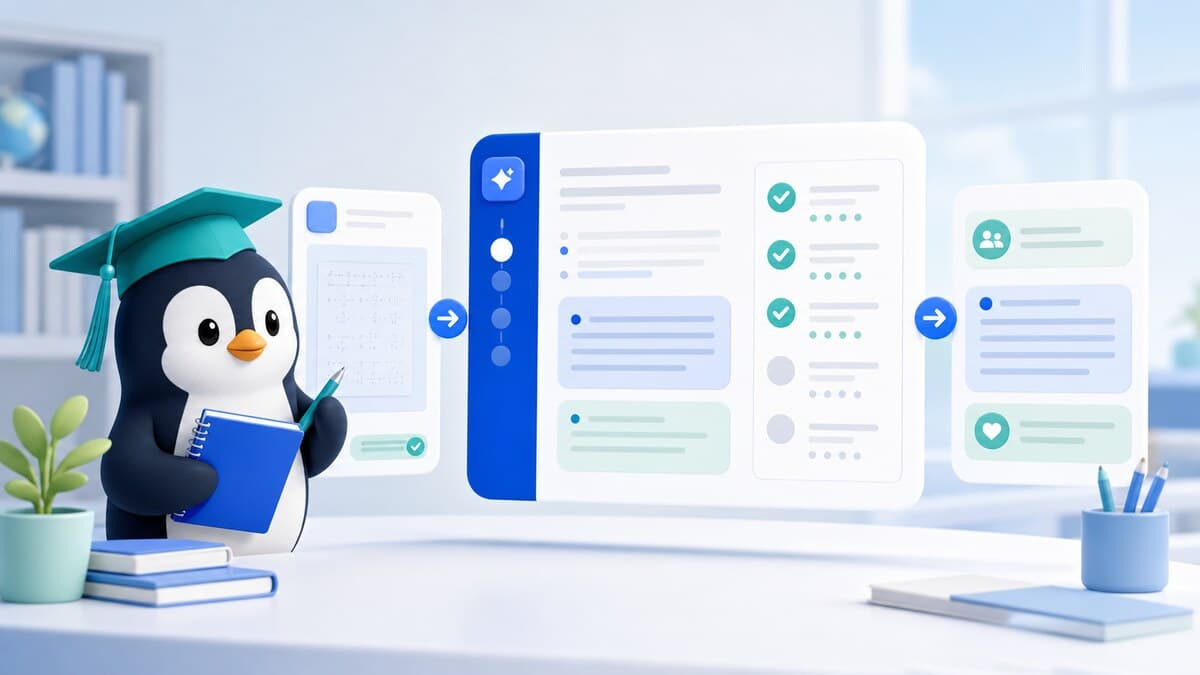
Good homework feedback is not just a correction. It is the bridge between what a student tried, what they misunderstood, and what they should practise next.
That bridge takes time. Private tutors often know exactly what would help a student, but the week is full of scattered uploads, parent questions, lesson notes, and small admin decisions. The result is familiar: the quality bar stays high, and the evening gets longer.
Separate the first pass from the final judgement
The fastest feedback systems do not remove the tutor. They reduce the blank-page work before the tutor makes the call.
A useful first pass gathers the submission, checks it against the assignment context, and drafts the rough shape of the response: what went well, where the reasoning broke down, and which next step would be worth practising. The tutor then edits, trims, and approves the message before anyone else sees it.
That distinction matters. Bomi's feedback workflow is designed around tutor-reviewed AI drafting, not autonomous grading or replacement teaching. The draft can save typing time, but the tutor keeps the relationship, judgement, and final word.
Turn feedback into the next small learning loop
A correction is easier to trust when it points somewhere concrete. Instead of ending with a score or a generic comment, the strongest feedback answers a quiet question: what should this student do next?
For one student, the next step might be a short retry on a missed method. For another, it might be a gentler explanation in the family's preferred language or a practice set that focuses on one recurring mistake. The goal is not to make every response longer. It is to make the next action clearer.
That is why feedback, practice, and parent updates belong close together. When the loop stays in one place, the tutor can move from review to follow-up without reconstructing the whole lesson from memory.
Protect parent trust with steady language
Parents do not need every internal note. They need enough context to understand progress, effort, and what the tutor is doing next.
A parent-ready summary should sound calm and specific: this is what we reviewed, this is where confidence is improving, this is what we will practise before the next session. It should avoid inflated promises and keep the tutor's voice intact.
That steady rhythm is often what makes tutoring feel premium. Families can see that feedback is not disappearing into a private notebook, and students get a clearer path back into the material.
Keep the system small enough to repeat
A feedback workflow only works if it survives a normal week. If it depends on heroic Sunday prep, it will eventually break.
Start with a lightweight loop: collect the homework, review a draft, approve the student-facing feedback, and send one useful next step. Repeat that enough times and the system becomes easier to trust than a pile of disconnected documents.
The best version still feels like your tutoring. It simply gives the small admin pieces somewhere to go.